AI in HR is not just a technological tool — it is a catalyst reshaping how organizations manage their workforce. From HR talent acquisition and employee development to retention, and from automation to strategic planning, AI introduces new opportunities to enhance business efficiency, agility, and long-term resilience.
Companies that integrate AI into their HR practices gain a competitive advantage: they identify talent more quickly, support employee adaptation more effectively, manage data with greater precision, and foster a professional culture rooted in analytics and innovation.
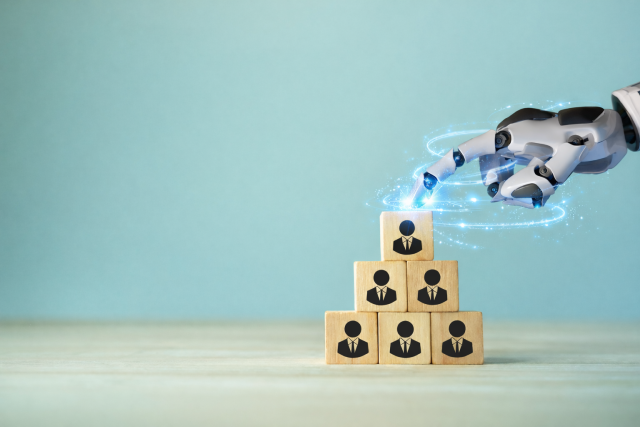
Artificial intelligence does not replace HR professionals, but it significantly simplifies their work. In this guide, we will explore in detail how AI tools can support the automation of hiring process, onboarding, training, and retention. You will gain insights into the key areas where these technologies can be applied, learn how to successfully integrate AI into your HR function, and understand how its implementation can improve the overall effectiveness of your HR strategy.
Let us now examine the core tasks that neural networks are capable of managing.
AI resume screening
The concept is straightforward — Ai hiring algorithms compare a candidate's experience with the job requirements, identify matches in relevant skills, and analyze professional achievements.
This approach is especially effective for companies engaged in mass hiring or those who receive a high volume of applications for open positions.
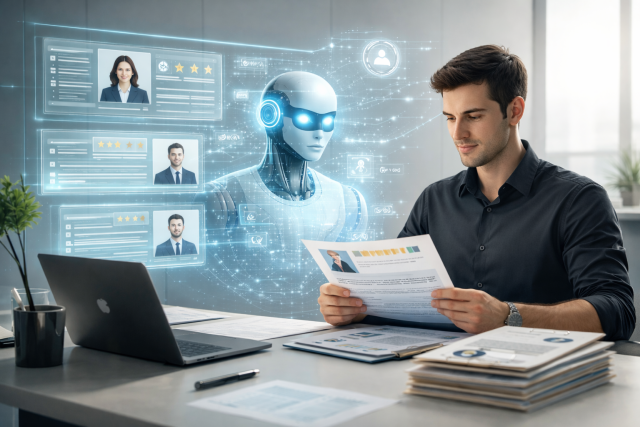
AI resume screening involves the following steps:
Data parsing and extraction
The AI recruiter assistant first converts each resume — usually in PDF or Word format — into structured data. NLP algorithms extract key information such as names, education, job titles, dates, and skills.
Keyword and skill matching
The system compares the content of each resume with the job description. Basic models look for exact keyword matches, while advanced AI for recruiting solutions understand context and semantic relationships between skills and requirements.
Structured interview questions
Instead of staring at a blank list wondering where to start, you get three to seven questions built around the actual role — and they come in an order that makes sense: an opener first, then the questions that dig into hands-on skills, followed by behavioral ones, then something that checks deeper competency, and finally a question or two on motivation and fit.
Nothing here is locked in. Swap a question for your own, drop one that doesn't fit, or regenerate the whole set if the first pass misses the mark. Keep it short and specific — candidates get two minutes per answer, and tighter questions tend to pull out sharper.
Bringing it together
Start with a few words about the role, and the AI drafts the vacancy. From there, it builds out interview questions shaped to that specific posting — each one paired with its own criteria, so you know exactly what to listen for before a single candidate hits record.
Then it's just watching and deciding. The criteria sit right next to each video, keeping every candidate held to the same bar instead of drifting toward whoever made the best first impression. From there, you decide who moves forward to a live interview or phone screen — the call stays yours, start to finish.
Initial candidate screening
Virtual recruiter can take over initial communication with candidates — through a chatbot or during preliminary interview. It can ask standard questions in place of a recruiter, analyze the responses, their content and structure, and then generate a concise summary for the HR specialist to review.
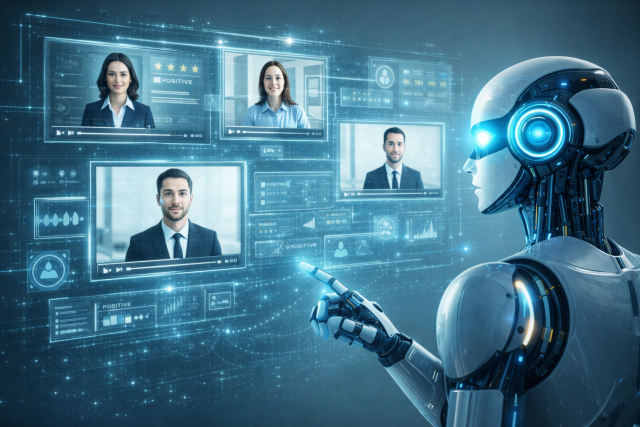
Video interviews, such as those conducted through the VideoApply platform, help recruiters assess candidates' communication skills, confidence, and overall presentation — especially for roles where strong interpersonal skills are essential. They also give candidates a valuable opportunity to make a strong first impression.
How does it work?
The bot sends the candidate a link to the interview platform along with clear instructions. The candidate can record video responses to the artificial intelligence interview questions at a convenient time. If desired, they may re-record their answers before submitting the final version with the recruiter. Once submitted, the hiring manager can review the video and decide whether to move forward with the candidate or decline their application.
Employee onboarding and development planning
A neural network can streamline two critical stages of an employee's career path within a company — adaptation and professional growth. At the onboarding stage it can create a personalized plan that includes links to internal training materials, detailed work and collaboration guidelines, as well as a schedule of initial tasks and meetings. The system also tracks progress and sends reminders about deadlines to both the newcomer and their manager.
Once the onboarding process is complete, the neural network is able to analyze the results and draft an outline for the employee's further development within the company. In other words, it can draw a career roadmap — identifying potential professional roles, the skills required for each, and the steps needed to acquire them. The HR manager will only need to review and refine this preliminary plan, and then discuss it with the employee.
Personalized Learning
AI for HR analyzes employees' development needs, learning preferences, and career ambitions to create an optimal training program for each individual, using both internal and external educational resources.
9 examples of using AI Hr tech in online learning development
1. Automated course structuring
When developing corporate training programs, the Training Within Industry (TWI) methodology is particularly effective. It involves organizing learning content by clearly identifying key stages and critical learning points. If you have a document — such as an internal manual or a technical guide spanning several hundred pages — you simply upload it to the system, and the algorithms will automatically
- Identify meaningful content blocks;
- Group information by topic;
- Propose an optimal and logically structured learning sequence.
2. Employee testing
Modern AI Hr systems efficiently process existing materials — such as internal policies, technical documentation, or training manuals. All you need to do is upload a file. Based on this content, the system generates not just random questions, but logically structured assignments that directly align with the source material and support the defined learning objectives.
3. AI-powered voiceover for learning content
AI automatically generates professional audio narration from text using models with various tones and intonations. This enables the creation of more engaging and accessible training materials, particularly for organizations with multilingual staff. Voiceover significantly increases employee engagement and supports better comprehension of complex topics.
4. Performance analysis and outcome
Using machine learning technologies, it is possible to collect detailed data on how participants progress through training. Based on this data, the system can identify areas where most employees encounter difficulties and make mistakes, and automatically recommend additional explanations or exercise to improve understanding.
5. Multilingual Content Support
If your course is designed for an international audience, AI can translate content into dozens of languages, adapt it to cultural nuances, and preserve the original meaning. Modern AI models deliver high translation accuracy while maintaining the correct terminology and tone.
6. Generation of visual learning materials
Generative neural networks enable the creation of illustrations, diagrams, charts, and infographics. This makes learning more visually compelling, especially when explaining abstract concepts or complex processes.
7. Automated presentation creation
One of the time-consuming tasks in training development is preparing visual material such as presentations, slides, diagrams, and key points. AI advantages allow you to fully automate this process: simply upload a text document, and the system will transform it into a structured, ready-to-use presentation.
8. Rapid Content Updating
Updating training materials is often a labor-intensive process, especially when the changes affect only certain sections rather than the entire course. Previously, any update to regulations or internal procedures required a full review of all content. Today, with the help of the AI driven technologies, you can refresh only the specific parts impacted by the changes, while maintaining the course's overall structure, style, and coherence.
9. Integration with Learning Management Systems
Modern LMS (Learning Management Systems) are becoming increasingly intelligent through AI integration. AI enables these platforms not only to store courses and tests, but also automate key learning processes — from user registration to personalized learner support.
Document management and reporting automation
Documentation is a major and time-consuming aspect of work, and it must be proceeded quickly and accurately — this is another area where AI in HR can be extremely useful. Neural networks recognize and fill out standard forms such as contracts, applications, certificates, and questionnaires. They can also extract relevant information from databases, verify the accuracy of entries, and route documents to the appropriate specialist.
Additionally, such systems track employee vacations and sick leaves, calculate payments, and generate personnel reports. Altogether, this not only saves a great amount of time but also noticeably reduces the likelihood of error.
Predicting employee burnout
AI analyzes employer behavior and detects early signs of burnout. It typically detects this through decreased activity in communication channels, avoidance of meetings, and reduced productivity. Algorithms compare a specific individual's behavior with the patterns of employees who have previously experienced burnout and then alert the HR specialist, recommending timely intervention.
How AI in HR analyzes employee behavior
Analysis of digital footprints
This is the first step in understanding employee well-being. AI job includes collecting data from a wide range of sources, including emails, instant messaging, and interactions within various applicatios. For example, if an employee who previously demonstrated consistently high performance begins sending shorter messages with longer response times, it may indicate decreased engagement. In such cases, an HR specialist can proactively reach out and offer support before the employee experiences burnout.
Automated mood monitoring
Neural networks can continuously track key indicators to predict potential cases of burnout. This allows for proactive support: For example, the system may ask, "How are you feeling today?" — using algorithms based on the individual wellbeingl data collected for each employee.
How AI helps maintain work engagement
Personal AI Assistant
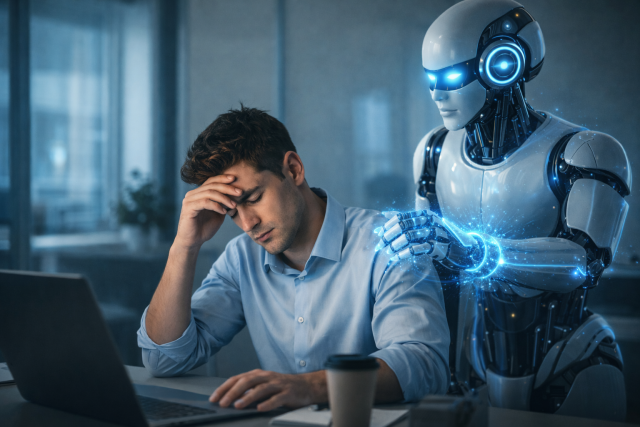
A virtual AI assistant can be a true game-changer. It not only assigns tasks but also closely monitors their progress and intervenes when it detects signs of employee overloaded. This goes beyond simple process automation — it enables the creation of a work environment that balances productivity with employee wellbeing.
Optimization of employees' workflows
AI in hr can automate routine tasks, which often consume a significant portion of employees' time and energy. The high volume of urgent and repetitive tasks is a common source of ongoing stress. By reducing this burden, AI helps employees focus on meaningful work that brings satisfaction.
Preventing employee turnover
AI tools for HR can help identify employees who are most likely to leave the company. A neural network determines this based on factors such as how long it has been since the employee's last promotion, their level of engagement in company activities, and whether they take on new challenging projects that demonstrate professional initiative.
By analysing these patterns, employee attrition forecasting model determines the likelihood that an employee may decide to leave the company and suggests measures to prevent this outcome. The algorithm uses data already available to HR specialists, including organizational staffing plans attrition statistics and aggregated corporate communication data.
The system calculates the propability of voluntary resignation within 3-4 months and highlights the specific factors that increase the risk for each individual employee. This model supports proactive retention efforts by helping the company focus on employees whose retention is most critical.
How to implement AI in your HR department?
The following 8 steps will help you optimize your HR workflow efficiently — without requiring significant time or financial investment. By following them in sequence, you can enable AI in HR to begin streamlining your entire department quickly and effectively.
Step 1. Build an HR digital transformation team
You will need a cross-functional team that brings together expertise from various fields:
- Project manager — coordinates the team, manages timelines and budgets.
- HR process expert — ensures a deep understanding of HR process transformation.
- IT architect — responsible for the technical feasibility of solutions and their integration into the company's IT landscape.
- Data specialist — ensures proper data management and develops analytical models and algorithms.
- UX specialist — focuses on creating a seamless and user-friendly experience for end users of new solutions.
Step 2. Identify the most resource-intensive HR tasks
Begin by analyzing where your HR team spends the majority of its time and resources. Review the entire workflow to determine which activities consume the most working hours — such as resume screening, initial candidate sorting, or document processing. These are precisely the tasks that can be delegated to AI driven system without compromising quality or accuracy.
Step 3. Select a task suitable for AI delegation
It's near to impossible to automate everything at once. Choose a simple, repetitive task such as resume sorting or generating standardized vacation request templates. This will allow you to assess, in practice, whether AI truly reduces the time and effort required to complete the task.
Step 4. Select the right tool
Choose an AI assistant that fits your preferred interface and budget. A tool integrated into your CRM tasks documents and chats will help you more efficiently create employee new updates, draft job descriptions, generate onboarding ideas, and prepare step-by-step instructions.
Step 5. Test and collect feedback
Find a group of employees willing to test the new format. Discuss their objectives, have them explore and try on the service, and collect their constructive feedback and suggestions for improvement.
Step 6. Implement AI in HR and train the team
Once you have selected and tested the neural network, you can introduce the AI tool to the entire HR department. Explain to employees how the system works, demonstrate practical use cases, and address their questions.
Step 7. Measure the ROI of each stage
Clearly document the business impact of implementation and use this data to justify further investments.
Step 8. Monitor and improve the process
AI job is not yet flawless — it may make mistakes such as assigning low scores to strong candidates or overlooking important details.Therefore ,always ensure that the final decision remains with a human.
Types of AI in HR
AI encompasses a wide range of technologies, each playing a unique role in transforming human resources.
Generative AI
Generative AI uses large datasets to create new content such as text, images, and videos. HR teams can leverage it to personalize candidate outreach, generate compelling job descriptions, and develop learning materials.
Conversational AI
HR chatbots and virtual assistants based on natural language processing (NLP) provide instant, 24/7 support for candidates and employees. These AI tools can answer questions, assist employees, offer personalized training recommendations, and enhance engagement across the employee lifecycle.
Voice AI technology
Voice-enabled virtual HR assistants use speech recognition and processing to handle employee inquires and quickly resolve requests in real time, improving
responsiveness and availability.
Machine Learning
Machine learning enables AI driven systems to learn from data and improve over time. In HR, it can match candidates to suitable roles, recommend fair salary ranges, and predict employees turnover risks.
Supervised learning models are trained on specific examples and can forecast outcomes, such as whether a candidate is likely to succeed in a role.
Unsupervised learning identifies hidden patterns in large datasets without prior instructions — for example, revealing why certain departments experience higher turnover rates.
Natural Language Processing (NLP)
This AI technology interprets written and spoken language. In HR, it can analyze employee surveys and feedback, summarize performance reviews, and detect sentiment trends. Understanding employee sentiment allows HR professionals to address potential issues proactively and maintain a healthy workplace environment.
AI Agents
AI Agents represent a new generation of intelligent systems capable of acting autonomously, making decisions, and completing HR tasks with minimal human intervention. In HR, AI agents can proactively monitor employee performance, suggest career development opportunities, plan training programs, and even assist with onboarding new hires.
Final word
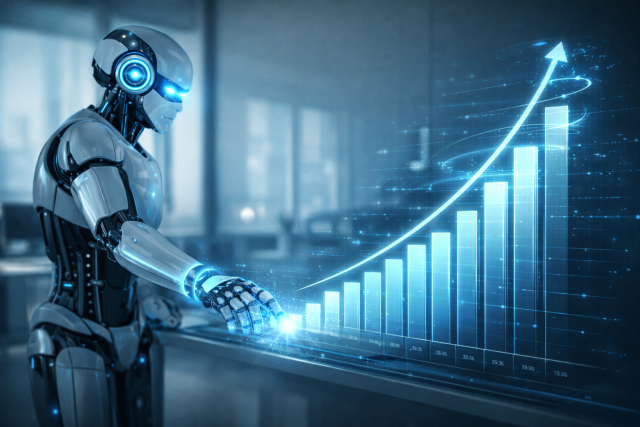
AI in HR refers to algorithms that help optimize human resources workflow — from sourcing and onboarding new employees to enhancing retention and fostering professional development. AI technologies in HR are no longer just tools for automation. They are becoming a strategic driver of business growth.
With our clear and comprehensive guide, you can gain insight into the future of digital HR technologies — and leverage these innovations to achieve success today.


