AI in recruitment: how artificial intelligence changes the hiring process
December 2025 · 7 min reading
Recruitment is a complex and resource-intensive process. Each vacancy requires reviewing hundreds of resumes, communicating with dozens of candidates, and analyzing a wide range of data. Artificial intelligence helps automate routine tasks, accelerate hiring, and enhance the quality of candidate selection.
In the past, hiring managers had to manually review applications and conduct lengthy interviews. Today, AI in HR makes it possible to identify the most promising candidates in just seconds, predict their potential success, and analyze video interviews.
Let's explore which technologies are currently being used and how companies are benefiting from them.
Fast resume analysis
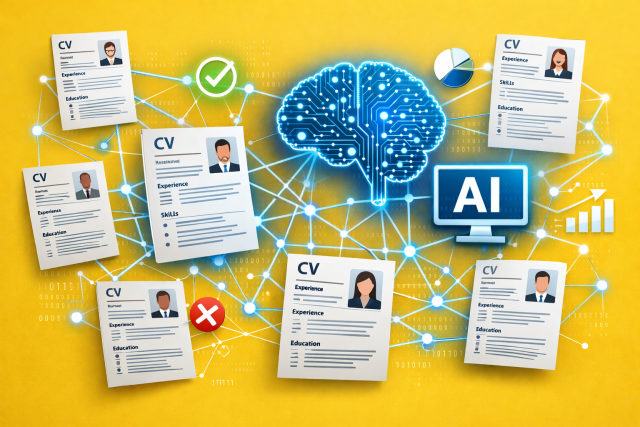
Recruiters often have to review hundreds of applications to select just a few suitable candidates. AI resume screening algorithms can complete this task in seconds, analyzing summaries of work history according to predefined criteria. For example, if a company is seeking a warehouse associate familiar with inventory management software, the system instantly selects all candidates with the relevant experience.
How AI evaluates resumes
Digital recruitment is transforming the way companies assess job applications. Here's how the process typically works:
1. Automated resume scanning
AI systems analyze resume text and extract key information such as:
- Professional experience and achievements
- Skills and competencies
- Education level
- Language proficiency and certifications
This automation significantly reduces the time required for initial candidate screening.
2. Matching against job requirements
The AI recruitment tools compare resume data with the job description and calculate a match percentage. This allows recruiters to quickly identify candidates who best fit the role and prioritize them for the next stages of selection.
3. Discovering hidden talent
Beyond keyword matching, AI analyzes the context, helping uncover candidates with unconventional but relevant backgrounds that might otherwise be overlooked in manual screening.
4. Assessing soft skills
Some advanced platforms use semantic analysis to infer traits such as adaptability, communication style, and teamwork orientation — offering a more holistic view of each applicant.
Benefits of using AI in resume evaluation
- Speed and scalability. Unlike manual review, AI can process hundreds of resumes in minutes.
- Improved accuracy. By analyzing both hard skills and contextual information,
AI reduces the risk of overlooking strong candidates.
- Analytics and insights. AI provides HR specialists with reports on typical candidate profiles, helping refine job descriptions.
This approach reduces the workload on the HR department, and accelerates the recruitment process severalfold.
Candidate search across platforms
Candidate data is often dispersed across multiple channels — LinkedIn, personal websites, past applications and various online platforms. Manually compiling a comprehensive profile from these sources is both time-consuming and inefficient, leading many recruiters to depend on just one or two familiar platforms.
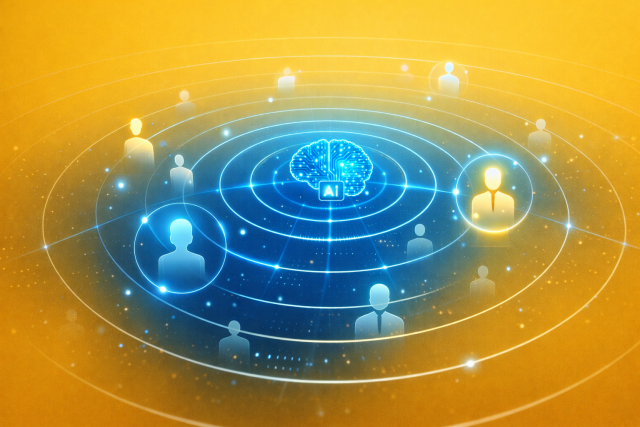
A virtual recruiter isn't limited to resumes stored within a company's internal database. It automatically scans open job listings, social networks, and professional websites to identify suitable candidates. For example, if a company is looking for drivers, the system can analyze profiles posted on various job boards and employment platforms.
AI-driven sourcing solutions streamline this process by aggregating information from diverse sources into a single unified candidate profile. This provides recruiters with a holistic view of each applicant, eliminating the need for extensive manual research.
Benefit
This broad, automated search significantly expands the talent pool, helping recruiters discover qualified candidates who may not have directly applied but match the company's requirements.
Screening and evaluation of candidates
AI for recruiting goes beyond simple resume screening — it provides a multidimensional assessment of candidates. For example, AI can:
- Analyze social media profiles to understand candidates' interests and determine how well their values align with the company's corporate culture. AI builds a psychological profile of a candidate based on their digital footprint — including written content, social media activity, and online interactions.
- Evaluate test assignments, helping to identify each candidate's strengths and areas for improvement. It is enough to upload a resume and specify the desired requirements through a prompt — the AI will then generate a detailed assessment of the candidates' fit for each criterion, highlighting both strengths and areas of growth. The analysis goes far beyond basic skill matching: an AI talent acquisition tool evaluates not only education and career achievements, but even writing style, providing HR professionals with a comprehensive view of a candidate.
- Predict potential success by analyzing data from previous workplaces and career trajectories. AI applies predictive analytics to forecast a candidate's potential for success based on historical data. It can analyze factors such as prior work experience, performance outcomes, and results of professional assessments.
Example of application
In the retail sector, AI can analyze the profiles of sales associates and cashiers to identify candidates most likely to remain in the position long-term.
Communication with candidates
Artificial intelligence not only assists in candidate selection but also streamlines communication throughout the hiring process. Chatbots and voice assistants can help with communication in various ways.
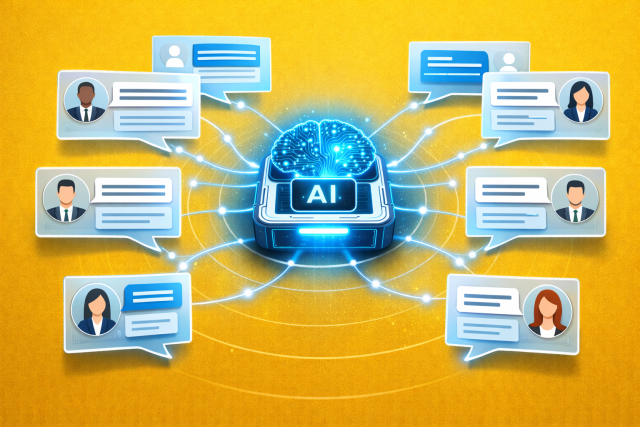
Respond to candidates' inquiries
A chatbot can deal with questions regarding job openings and application details.
Provide detailed information about job openings
It can share comprehensive details about a specific position or help candidates find other suitable roles within the company if multiple vacancies are available.
Respond to candidate inquiries 24/7
Since many applicant questions are repetitive, the chatbot can efficiently address common topics and provide timely, consistent answers to potential employees at any time of day. A chatbot is able to handle an unlimited number of conversations simultaneously, ensuring that every applicant receives real-time responses without any delays.
Do Interview scheduling
AI can provide an efficient recruitment workflow. Here's how it works:
- Access to available time slots. The chatbot is connected to the company's scheduling system and can offer available interview slots to candidates who have successfully passed the initial screening.
- Candidate self-scheduling. The candidate selects a convenient time, and the HR specialist automatically receives a notification — via messenger, email, or a direct calendar booking.
- Automatic interview details. The chatbot sends the candidate the address for an in-person meeting or a link for an online interview.
- Reminders and rescheduling. On the day of the interview, the candidate receives an automated reminder. An interview helper interface may also include options to reschedule or cancel if necessary.
- Post-interview communication. After the interview, a recruiting specialist can use the chatbot to send a follow-up message — either an offer with employment terms or a polite rejection.
Example of application
In large warehouse operations, a chatbot can process job applications for loaders and pickers by asking about preferred schedule, previous experience, and readiness to work in shifts.
Section Review on your own time
No more juggling calendars to find a slot that works for you, the candidate, and whoever else is sitting in on the interview. Candidates record their answers whenever it suits them — early morning, between meetings, whenever the words come easiest — and the responses land in your queue ready to watch.
You go through them on your schedule too. Ten minutes before lunch, a stretch of downtime between calls, wherever it fits. Nobody's stuck waiting on a callback, and nobody's blocking out half a day for interviews that could've been five separate ten-minute conversations spread across a week.
It sounds like a small shift. In practice, it's the difference between hiring dragging on for a month and moving at the pace it should.
Application example
In delivery services, AI can evaluate how confident and friendly a candidate appeared during the interview — qualities that are essential for customer-facing roles.
Why is it beneficial for businesses to use AI in recruiting?
Integrating a virtual AI assistant into the hiring process provides companies with tangible advantages:
- Faster hiring cycles. Vacancies are filled significantly more quickly, as AI sourcing algorithms can process candidate data almost instantly.
- Reduced costs. Businesses save on expenses associated with hiring HR assistants, posting job advertisements, and conducting lengthy interviews.
- More objective selection. AI systems are free from human bias , minimizing the risk of subjective errors in candidate evaluation.
- Lower employee turnover. By analyzing historical data, AI can predict which candidates are more likely to stay with the company long-term — a crucial factor for roles with high rotation rates.
How are businesses already using AI in recruitment?
- Automated resume screening. Companies use AI to process and evaluate resumes, reducing the time-to-hire by three to five times.
- Candidate AI sourcing. Recruiters leverage AI driven tools to identify potential candidates across social media platforms and professional communities.
- Video interview analysis. AI systems assess recorded interviews to help identify candidates' competencies and personal qualities.
- Employee retention forecasting. AI predicts which candidates are more likely to stay longer in a role, helping organizations reduce staff turnover.
Drawbacks of using AI for recruiting
While the advantages of AI in hiring are clear, its implementation also comes with significant limitations that businesses should carefully consider.
1. Potential algorithmic bias
Although artificial intelligence is often perceived as a tool that eliminates subjectivity, in practice it can reproduce — or even amplify — existing biases. This happens because algorithms are trained on large datasets that frequently reflect historical stereotypes. For example, if most of a company's successful hires in past years were men of a certain age group, the AI model may automatically favor similar applicants, overlooking women or older male candidates who possess the right skills.
How to mitigate this risk?
- Regularly audit algorithms for bias and adjust selection criteria accordingly.
- Use diverse and representative datasets to train AI systems, minimizing the risk of narrow or biased outcomes.
2. Lack of flexibility in candidate evaluation
Digital recruiter evaluates candidates strictly according to predefined parameters, which can sometimes lead to misjudgements. For instance, if the system filters for applicants with at least five years of experience but ignores professional achievements or a strong willingness to learn, it may reject talented individuals who could excel in the role.
How to mitigate this risk?
- Combine AI-driven tools with the expertise of HR professionals who can identify unconventional but promising candidates.
- Configure algorithms to consider not only quantitative factors (such as years of experience or education) but also qualitative indicators, like performance quality and learning potential.
3. Loss of the human touch in hiring
Automation has clear benefits, yet recruitment inherently requires elements of human judgment. Personal interaction — live interviews, interpersonal chemistry, and a recruiter's intuition — often reveals whether a candidate will fit well into the company culture. Even when analyzing video interviews, AI cannot fully assess motivation, charisma, or the ability to adapt to complex, real-world situations the way a human recruiter can.
How to mitigate this risk?
- Use an AI recruiting assistant primarily during the early stages of recruitment, leaving the final decision to HR professionals.
- Incorporate more personal interviews to gain a multidimensional view of each candidate.
4. Implementation challenges and high costs
Advanced solutions demand substantial investment. Development, algorithm training, and system customization to meet specific organizational needs require both time and financial resources. For small businesses, these technologies may still be largely out of reach.
How to mitigate this risk?
- Implement AI tools for HR gradually, starting with simple tools such as chatbots for initial application screening and automated resume analysis.
- Opt for cloud-based platforms and ready-made AI HR tech to reduce implementation and maintenance costs.
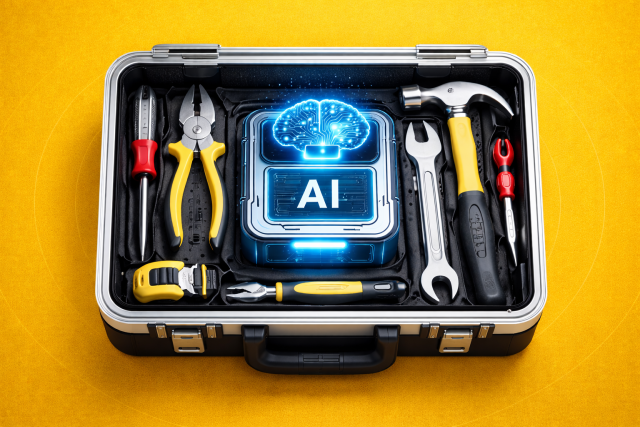
AI is a powerful tool, not a replacement
Artificial intelligence offers tremendous opportunities to automate and optimize the hiring process, but AI in recruitment cannot fully replace HR professionals. These technologies help filter out unsuitable candidates, analyze data, and simplify communication, yet the final hiring decision should always rest with a human.
To achieve maximum efficiency, the best approach is a thoughtful combination of AI and human judgment. This balance allows businesses to leverage technology to its fullest potential while avoiding its inherent limitations.


